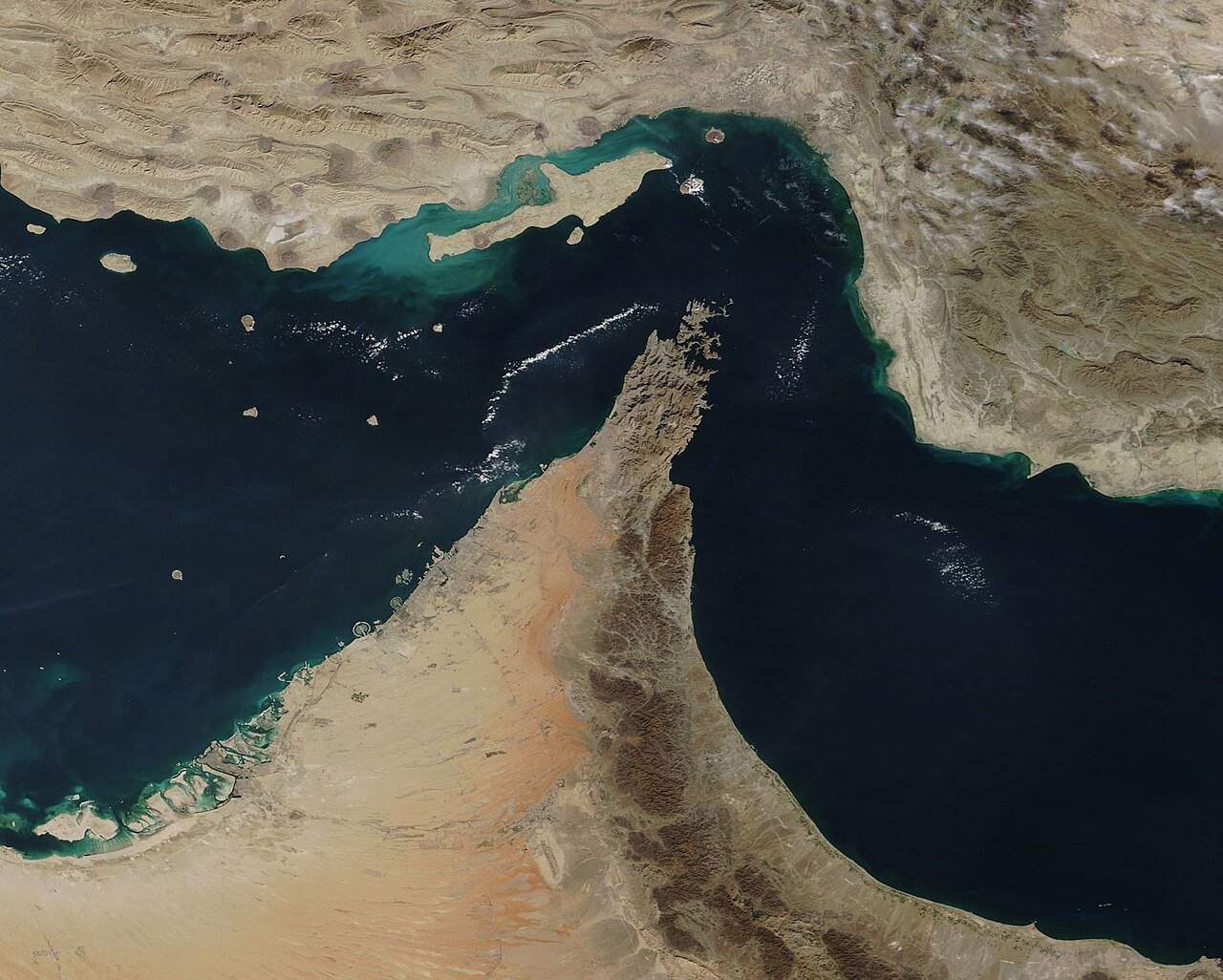
Iran and the United States made competing claims over control of the Strait of Hormuz on August 13, keeping one of the world’s most important energy shipping routes at the center of global market attention. The development comes as negotiations over restoring normal traffic remain unresolved, while oil prices have also come under pressure from weaker global demand expectations.
Why the Strait of Hormuz Matters
The Strait of Hormuz connects the Persian Gulf with the Gulf of Oman and the Arabian Sea. Although it is only about 54 km wide at its narrowest point, it carries a significant share of global energy trade.
The International Energy Agency estimates that around 20 million barrels per day of crude oil and oil products passed through the strait in 2025, equivalent to about 25% of global seaborne oil trade. Around 80% of these flows were destined for Asian markets, making countries such as China, India and Japan particularly exposed to prolonged disruption.
The waterway is also important for liquefied natural gas. The IEA estimates that almost one-fifth of global LNG trade moved through the strait in 2025, including the vast majority of LNG exports from Qatar and the United Arab Emirates.
Why Alternatives Are Limited
Some Gulf producers can use pipelines to bypass Hormuz, but available alternative capacity is much smaller than normal shipping volumes.
The IEA estimates that Saudi Arabia and the UAE have about 3.5 million to 5.5 million barrels per day of potential alternative crude export capacity. This means pipelines can reduce some pressure but cannot fully replace the waterway if disruption continues.
This structural limitation explains why developments around Hormuz can influence markets far beyond the Middle East. Even when physical supplies are not immediately exhausted, traders can price in the possibility of tighter future availability, higher freight costs and greater insurance risks.
What the Latest Oil Move Tells Investors
Oil markets have shown a more complicated response than a simple supply shock would suggest.
Reuters reported on August 13 that Brent crude fell more than 3% at one point as investors focused on weaker demand expectations and a large increase in US crude inventories. OPEC also lowered its 2026 oil demand growth forecast, while the IEA expects global consumption to contract this year amid high prices and supply disruptions.
This highlights an important market dynamic. Geopolitical risk can support oil prices, but weaker economic activity can work in the opposite direction.
For investors and businesses, the result is an environment where energy prices may remain volatile even when prices are moving lower in the short term.
What Businesses Should Watch
Companies with high energy, transportation or imported-input costs may need to monitor several indicators rather than focusing only on crude prices.
Key factors include:
- Developments affecting commercial shipping through Hormuz
- Oil and LNG prices and freight costs
- Global fuel demand forecasts
- US and international inventory levels
- Alternative pipeline and shipping routes
- Insurance and financing costs for energy-related trade
- Central bank responses if energy prices affect inflation
The broader lesson for entrepreneurs is the value of supply-chain diversification. Businesses that depend heavily on a single shipping route, energy supplier or geographic market can face higher costs when geopolitical disruptions occur.
What Comes Next
The immediate market focus will remain on whether diplomatic efforts can restore predictable shipping through the Strait of Hormuz. A sustained improvement could reduce the geopolitical premium embedded in energy markets, while further disruption could increase pressure on fuel, transportation and manufacturing costs.
The longer-term issue is energy resilience. The IEA has previously noted that stock releases, alternative routes, additional suppliers and more flexible refining operations have helped the global market absorb part of the disruption.
For global citizens, policy analysts and investors, the situation demonstrates why a geographically narrow shipping corridor can have worldwide economic consequences. The next major signals will likely come from shipping activity, diplomatic negotiations, oil demand forecasts and the ability of producers to maintain supplies through alternative routes.